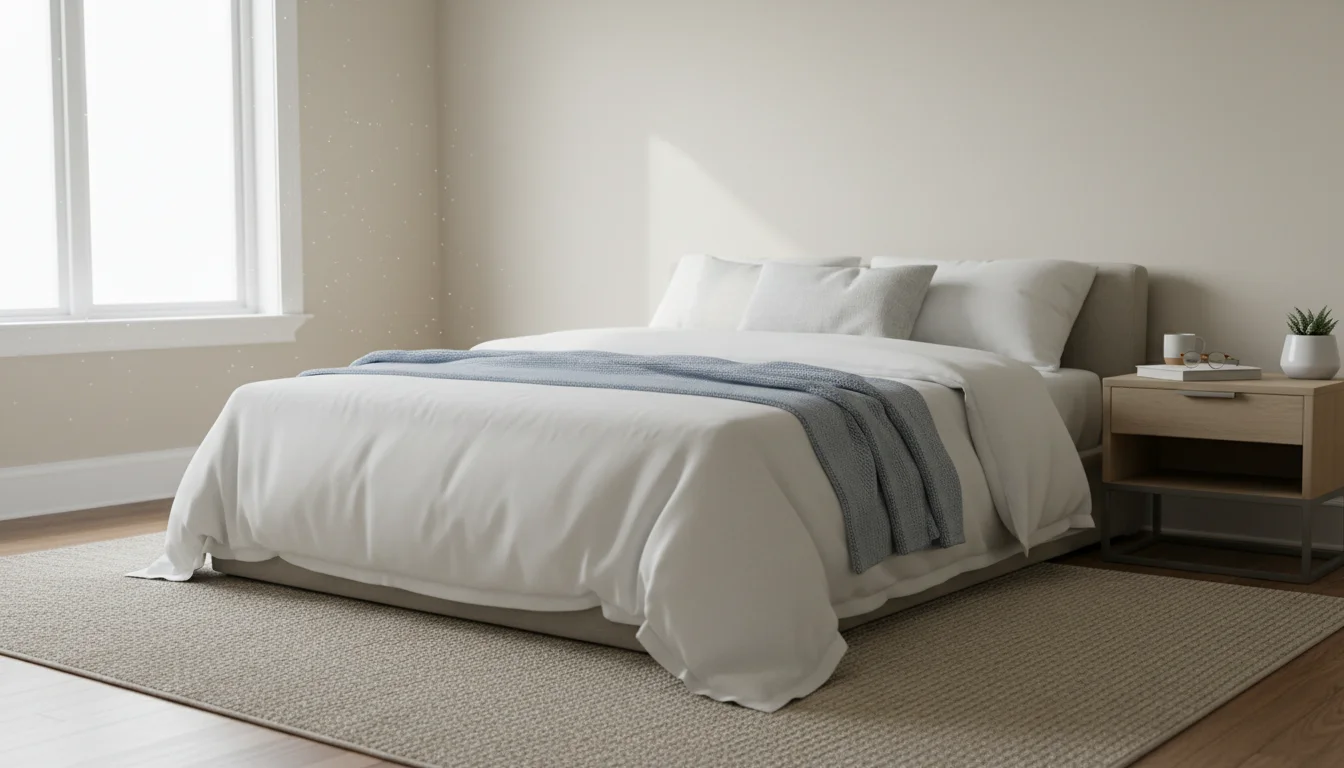
The One Room Your Phone Should Never Enter: Reclaiming Your Bedroom Sanctuary
If I could prescribe one single, non-negotiable intervention to nearly every family and individual I work with, it would be this: establish a tech-free bedroom. I say this not as a puritanical scold, but as a behavioral psychologist who has seen the data and, more importantly, witnessed the profound transformation in my clients’ lives. Your bedroom is not just a place to sleep; it’s a biological and psychological sanctuary for restoration, intimacy, and the quiet processing of your inner world. When we invite our devices across that threshold, we are fundamentally altering the architecture of our minds and our most important relationships.
I understand the resistance. Your phone is your alarm, your bedtime podcast source, your last-minute email checker, your digital security blanket. The thought of leaving it charging in another room can feel like a form of amputation. But that very feeling—that anxiety—is the clearest signal that a boundary is desperately needed. Let’s move beyond the generic “digital detox” chatter and explore the evidence-based, life-enhancing reasons why this single act is the cornerstone of modern digital wellness.
Beyond Blue Light: The Multilayered Assault on Sleep Architecture
Most of us know about blue light. We’ve heard it suppresses melatonin, the sleep hormone. But the disruption runs far deeper than a single wavelength. Creating a tech-free bedroom addresses a perfect storm of sleep saboteurs:
- The Cognitive Hijack: Scrolling through work emails or social media isn’t a passive act. It engages your prefrontal cortex—the brain’s CEO—in decision-making, evaluation, and emotional processing. You are essentially bringing the boardroom, the news cycle, and your social arena into bed with you. Transitioning to sleep requires a wind-down of this executive function, not a last-minute spike.
- The Anxiety Amplifier: A notification isn’t neutral. It’s a variable reward cue, triggering a micro-surge of anticipatory dopamine. Even if you don’t check it, the mere presence of the device creates a low-grade vigilance, a subconscious listening for the “ping” that fractures your peace. This state of hyper-arousal is the antithesis of the parasympathetic “rest and digest” state needed for sleep onset.
- The Temperature and Routine Disruption: Devices emit heat. A warm room is detrimental to the core body temperature drop required for quality sleep. Furthermore, using a device fragments your pre-sleep ritual. The brain thrives on predictable cues (brush teeth, read a book, lights out). A glowing screen is a chaotic, stimulating cue that tells your brain, “The day is still happening.”
Think of your sleep not as an on/off switch, but as a carefully orchestrated symphony. Your devices are like someone blasting heavy metal from the orchestra pit—it doesn’t just drown out one instrument; it destroys the entire composition.
The Intimacy Engine: Why Connection Flourishes in a Vacuum
This is where the benefits of a tech-free bedroom move from personal health to relational revolution. Intimacy—emotional and physical—requires vulnerability, presence, and undistracted attention. A device on a nightstand is a literal third party in your relationship, a constant potential source of interruption.
I often use the metaphor of the “Attention Bank Account.” Every time you glance at your phone during a vulnerable conversation or a quiet moment before sleep, you make a withdrawal from your shared account with your partner. A tech-free bedroom is a policy of making consistent, intentional deposits. It creates a sacred space where:
- Pillow talk can meander without competition.
- Silence is comfortable, not something to be filled with scrolling.
- Physical touch isn’t prefaced with “just let me reply to this.”
- The first and last moments of shared consciousness each day are truly shared.
The data is clear. Studies consistently link bedroom media use with lower sexual satisfaction and higher relational conflict. By removing the digital intermediary, you are not just banning a device; you are actively engineering an environment where human connection is the default, most interesting option available.
The Dawn of a New Day: Crafting Your Morning Routine Without a Phone
Your first waking moments set the cognitive and emotional tone for your entire day. When you reach for your phone immediately, you are essentially allowing the outside world—its demands, its dramas, its comparisons—to colonize your mind before you’ve even had a chance to connect with yourself. This is what I call “algorithmic priming.” You are letting an AI decide your initial emotional state.
A tech-free bedroom forces a beautiful, albeit initially uncomfortable, reset. Your morning becomes yours to design. Here’s a comparative look at the two pathways:
| Waking With Phone (Reactive Day) | Waking in a Tech-Free Room (Intentional Day) |
|---|---|
| Mind is immediately flooded with external stimuli (news, emails, social updates). | Mind has space for internal awareness (how you feel, dreams, intentions). |
| Stress hormones (cortisol) spike in response to work demands or social comparison. | Cortisol follows its natural, healthy curve, aided by light and gentle movement. |
| Attention is fragmented from the start, training a “switch-tasking” brain. | Attention can be focused, starting with a single, calming task (stretching, making coffee mindfully). |
| Self-worth is subtly tied to overnight digital validation (likes, replies). | Self-worth is anchored in the physical reality of waking up in a safe, personal space. |
The goal isn’t to become a monk at dawn. It’s to claim the first 30-60 minutes of your day as a buffer zone—a time to hydrate, move your body, perhaps journal or share a quiet breakfast with your family, before you engage with the digital world. This simple shift builds psychological resilience that lasts all day.
The Family Blueprint: Making the Tech-Free Bedroom Stick (At Any Age)
Implementing this with children, teens, and a reluctant partner requires strategy, not just decree. Frame it not as a punishment, but as a collective upgrade to your family’s quality of life.
The 3-Tier Implementation Framework:
- Lead with Science, Not Fear: Have a family meeting. Explain the “why” in age-appropriate terms. For kids: “Our brains need a super-charged rest to grow and play better.” For teens: “This helps with mood stability and focus for the things you care about.” Cite the research from authorities like the National Sleep Foundation.
- Co-Create the Solution: Involve everyone in the logistics. Where will devices charge overnight? (A kitchen charging station is ideal). What will replace the pre-screen wind-down? (Board games, reading, shared music). What alarm will we use? (Old-school alarm clocks are a must). This builds buy-in.
- Model and Reinforce Relentlessly: This is non-negotiable, especially for parents. Your commitment is the linchpin. Acknowledge the initial friction (“I feel weird too, but let’s stick with it for a week”). Celebrate the wins (“I noticed we laughed more at breakfast”).
For teens, this boundary is especially critical. Their developmental task is identity formation, which requires introspection. A phone in the room overnight means 24/7 peer pressure and algorithmic curation. A tech-free bedroom gives them a daily, guaranteed respite from that performance—a space to just be themselves, unobserved.
Your First Step: The Bedroom Boundary Audit
Ready to start? Don’t aim for perfection tonight. Begin with a compassionate audit. Tonight, simply observe:
- What devices are currently in your bedroom?
- What is their stated purpose vs. their actual use?
- How do you feel in the 30 minutes before you try to sleep?
- What is the first thing you do when you wake up?
Then, take the smallest viable step. Perhaps it’s moving the phone charger from the nightstand to a dresser across the room. Maybe it’s committing to no screens 30 minutes before bed. Small, sustainable changes rewire habits more effectively than drastic, short-lived overhauls.
FAQ: Navigating Common Tech-Free Bedroom Hurdles
Q: What about using my phone as an alarm clock?
A: This is the number one excuse I hear. Please, invest in a basic digital or sunrise alarm clock. Using your phone as an alarm is like keeping a chocolate cake in your bed to remind you to diet tomorrow. The temptation and proximity defeat the purpose.
Q: My partner refuses to participate. What do I do?
A> Start with your side of the bed. Model the change without nagging. You can say, “I’m doing this for my own sleep and focus, and I’d love for you to join me when you’re ready.” Often, the positive changes in your mood and energy become the most persuasive argument.
Q: What if I need my phone for emergencies?
A> This is a valid concern for parents or caregivers. Solutions include: turning on critical alerts only (most phones have this feature), keeping the phone on a high-volume setting but in a drawer across the room, or using a landline in the bedroom. The goal is to break the habitual, non-emergency use.
Q: How long until I see benefits?
A> Most clients report noticing deeper sleep and less morning anxiety within 3-5 nights. The improvements in mood, focus, and relational connection often become strikingly apparent within two weeks. For a deeper dive into the science of sleep and technology, the research at the Stanford Sleep Medicine Center is an excellent resource.
Remember, the goal of a tech-free bedroom is not to live an analog life. It’s to create a deliberate, protected space where you can recharge the very human capacities that allow you to engage with the digital world healthily and on your own terms. You are not losing a device; you are reclaiming your sleep, your relationships, and the quiet dawn of your own unmediated thoughts. That is not a sacrifice. It is the ultimate upgrade.