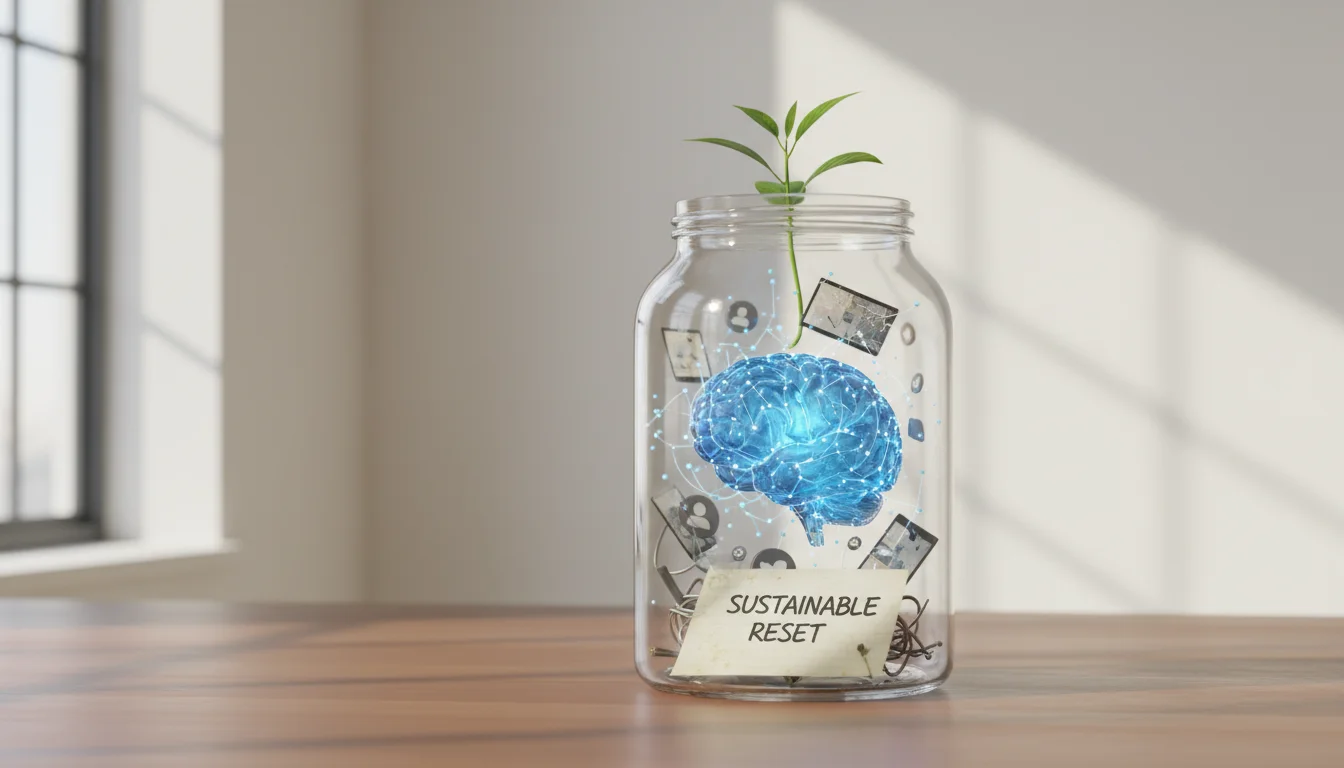
You’re Not Lazy, You’re Overstimulated: A Psychologist’s Blueprint for a Sustainable Dopamine Reset
If you’re reading this, you’ve likely felt it: that low-grade mental static, the inability to settle into a good book, the itch to check your phone during a lull in conversation, or the feeling that your focus scatters like light through a prism. You might call it brain fog, burnout, or just modern life. In my practice, I see it as a signal—a sign that your brain’s sophisticated reward system, powered by dopamine, is stuck in a cycle of overstimulation. The popular concept of a “dopamine detox” can sound extreme, like a punitive digital fast. But as a behavioral psychologist, I want to reframe it. This isn’t about moralistic deprivation. It’s about intentional recalibration. It’s about clearing the neurological clutter so you can genuinely enjoy life’s textures again—the deep conversation, the flow of work, the quiet moment of boredom that births a new idea.
Let’s move past the all-or-nothing hype. A sustainable reset is a structured, compassionate process of trading high-volume, low-nutrient digital stimuli for slower, richer, real-world rewards. Think of it not as a detox, but as a dopamine diet. You’re not banning food; you’re mindfully choosing nourishing meals over constant junk food snacking that leaves you hungrier. Your brain deserves the same consideration.
Understanding the “Why”: Your Brain on Hyper-Stimulation
First, let’s dispel a common myth: dopamine isn’t “bad.” It’s a crucial neurotransmitter associated with motivation, desire, and the pleasure of anticipation. The problem isn’t dopamine itself, but the unprecedented efficiency and intensity with which our digital environment hijacks this system.
Every notification, every infinite scroll, every viral reel is engineered to deliver a unpredictable, high-potency reward. This creates a reinforced loop: action (pull to refresh) -> variable reward (maybe a new like!) -> dopamine spike -> strengthened habit. Over time, this conditions your brain to expect rapid-fire rewards. Activities that require sustained effort—reading a complex report, practicing a skill, having a nuanced discussion—begin to feel neurologically “expensive.” They don’t deliver the quick hit. The result is what you experience as procrastination, restlessness, and that pervasive brain fog.
The goal of our evidence-based approach is to widen your brain’s “reward window.” We’re teaching it to find satisfaction in delayed gratification and subtle, sustained engagement. This isn’t about willpower; it’s about environmental redesign and behavioral retraining.
The Tiered Recalibration Framework: A Week of Intentional Practice
An effective reset must be structured yet flexible. Throwing your phone in a lake for a week is dramatic, but it doesn’t teach sustainable skills. Instead, I guide my clients through a three-tier framework. You can think of it as moving from decluttering (Tier 1), to conscious engagement (Tier 2), to proactive nourishment (Tier 3).
| Tier | Core Focus | Primary Action | Neurological Goal |
|---|---|---|---|
| Tier 1: The Digital Declutter | Reduce compulsive, low-value stimuli. | Remove temptation; create friction. | Lower baseline stimulation, interrupt autopilot habits. |
| Tier 2: Mindful Scrolling & Consumption | Transform passive intake into active choice. | Implement ritual and intention before engagement. | Reassert cortical control over the limbic reward system. |
| Tier 3: Proactive Reward Cultivation | Actively seek “slow dopamine” activities. | Schedule and protect time for deep play and connection. | Rewire reward pathways to appreciate effort-based, sustained engagement. |
Executing Your Personalized Reset: Actionable Dopamine Detox Tips
Now, let’s translate that framework into your week. This is not a rigid prescription, but a menu of strategies. Choose 2-3 to start.
Tier 1 Actions (The Declutter):
- The Notification Neutering: This is non-negotiable. Go into your phone settings and turn off all non-essential notifications. This includes social media, news, and most apps. Allow only people-based communications (texts, phone calls) and perhaps your calendar. This single step reduces the constant, unpredictable reward cues that fracture your attention. Research from the University of California, Irvine, shows it takes an average of 23 minutes to refocus after an interruption.
- Create Friction, Not Walls: Move social media and entertainment apps off your home screen and into a folder titled “Consume.” Add an extra step, like a password from a password manager you have to open. This tiny moment of friction allows your prefrontal cortex (the planning center) to engage and ask, “Do I really intend to do this right now?”
- The Physical Charging Station: Designate a spot in your home—not your bedroom—where all devices charge overnight. This establishes a sacred, device-free boundary for sleep and morning routine, protecting your most cognitively fresh hours.
Tier 2 Actions (Mindful Scrolling & Brain Fog Recovery):
- The “Why Before What” Rule: Before you open any app or tab for leisure, you must state your purpose aloud. “I am opening YouTube to watch the tutorial on fixing my sink.” “I am scrolling Instagram for 5 minutes to see updates from my close friends.” If you can’t state a clear intent, don’t open it. This practice, rooted in Acceptance and Commitment Therapy, inserts mindful choice between impulse and action.
- Schedule Your Consumption: Block 20-30 minutes in your calendar for “digital leisure.” When the time comes, engage fully. When the timer ends, stop. This contains the activity, preventing it from bleeding into your day and creating a time-bound reward, which feels more satisfying than open-ended scrolling.
- Curate Your Feed Like a Nutrient-Dense Plate: Actively unfollow or mute accounts that trigger comparison, anxiety, or mindless consumption. Proactively follow accounts that educate, inspire genuine creativity, or connect you to real interests (e.g., woodworking, local history, science). You are the curator of your mental diet.
Tier 3 Actions (Proactive Reward Cultivation):
- Prescribe “Deep Play”: Schedule an activity that induces a state of flow—where you lose track of time because the challenge meets your skill. This could be cooking a complex recipe, gardening, playing a musical instrument, or a physical sport. Flow states release dopamine in a sustained, healthy way linked to long-term satisfaction, as Mihaly Csikszentmihalyi’s seminal work describes.
- Embrace “Productive Boredom”: Intentionally create spaces with zero stimulation. Take a walk without headphones. Sit with a cup of tea and just look out the window. This boredom is not empty; it’s the fertile ground where your default mode network activates, leading to creative problem-solving and self-reflection. It’s the antidote to brain fog.
- Seek the “Micro-Connection”: Replace the dopamine of a “like” with the more complex neurochemical cocktail of a real human moment. Make eye contact and have a full conversation with your barista. Call a friend instead of texting. These small, prosocial interactions build oxytocin and serotonin, which provide a calm, enduring sense of well-being that no algorithmic feed can match.
Navigating the Inevitable Discomfort: Your Brain Will Complain
In the first 48-72 hours, you may feel irritable, anxious, or profoundly bored. This is not failure; it is withdrawal and recalibration. Your brain is so accustomed to the high-frequency hits that their absence feels like a deficit. Acknowledge the feeling: “Ah, my brain is seeking its usual easy reward.” Then, gently guide yourself to a Tier 3 activity. The discomfort is a sign the process is working.
Remember, the objective is not to live a tech-free life. It’s to restore your agency. Technology becomes a tool you use with intention, not a environment you live inside of passively. You are rewiring your brain to find the world interesting again, on its own terms.
FAQ: Your Dopamine Reset Questions, Answered
Q: How long does a dopamine detox need to be to see results?
A: You’ll notice subtle shifts in focus and reduced “itch” within 3-4 days of consistent Tier 1 and 2 practices. Significant improvement in brain fog and sustained attention typically requires 2-3 weeks of integrated practice, as new neural pathways begin to strengthen.
Q: Can I still listen to podcasts or music?
A: Absolutely. The key is intentionality. Passive background noise can still contribute to cognitive load. Try engaging in activities like walking, driving, or chores without any audio input sometimes. When you do listen, try doing just that—listen actively, not as multitasking filler.
Q: What’s the biggest mistake people make?
A: Adopting a punitive, all-or-nothing mindset. This leads to a “binge-and-purge” cycle with technology. Sustainability comes from the compassionate, tiered framework above—creating a balanced “diet,” not a starvation plan. For a deeper dive into the science of habit change, resources like the American Psychological Association’s articles on behavioral health and technology can be very helpful.
Q: How do I handle social pressure to be always available?
A: Set and communicate gentle boundaries. You can set an auto-responder stating you check messages at set times. Most people respect clear communication. For managing work-life boundaries, research from institutions like the Harvard Business Review on “psychological detachment” from work is invaluable.
The path to clearing brain fog and reclaiming your focus is a journey of small, consistent choices. It’s about recognizing that your attention is your most precious resource—the very currency of your life experience. By applying these structured, psychologically-grounded dopamine detox tips, you are not just doing a cleanse. You are undertaking a profound act of self-care: learning to curate your own consciousness and rebuild your capacity for the deep, satisfying work and connection that makes life meaningful. Start with one Tier 1 action today. Your future, less-foggy self will thank you.