
Your Phone Isn’t Buzzing. It’s Beckoning. Here’s How to Reclaim Your Attention.
If you’re reading this, you likely just silenced a notification. Or you’re waiting for one. That subtle, persistent tug on your awareness isn’t just an inconvenience; it’s a sophisticated, scientifically-engineered bid for your most precious resource: your focus. As a behavioral psychologist, I don’t see a cluttered notification bar. I see a modern anxiety dashboard, pinging with social validation, work urgency, and algorithmic predictions. The goal isn’t to shame you for this reality—it’s to equip you with a clinical-grade framework to master it. Let’s move beyond simple “do not disturb” modes and build a system of intentional attention allocation. This isn’t about missing out; it’s about choosing what you tune in to.
The Psychology of the Ping: Why Notifications Feel Like Tiny Emergencies
To manage notifications effectively, we must first understand their power. Each ping leverages a core neurological principle: intermittent variable reinforcement. You don’t know if the next notification is a mundane app update, a heart emoji from your partner, or a critical work email. This uncertainty triggers a dopamine-seeking loop, compelling you to check “just in case.” It’s the same mechanism that makes slot machines so addictive.
This constant state of low-grade hypervigilance has tangible costs. Research in cognitive psychology shows that task-switching—even just to glance at a notification—creates “attention residue,” where part of your brain remains stuck on the previous interruption. It can take over 20 minutes to fully regain deep focus. Over a week, these micro-interruptions don’t just steal minutes; they pilfer hours of productive, creative, or connective time. For parents, modeling this fractured attention teaches children that interruptions are the norm, undermining their own developing capacity for sustained focus.
The Diagnostic: Recognizing Your Personal Notification Profile
Before we prescribe solutions, let’s diagnose. Not all notification overload looks the same. I guide my clients and corporate workshops through identifying their primary profile. Which of these resonates most?
- The Anxious Responder: You feel a physical compulsion to address every notification immediately, fearing social or professional repercussions if you don’t. Your phone is always on vibrate in your hand or pocket.
- The FOMO Curator: Your notifications are primarily social and news-based. You fear missing a cultural moment, a group chat inside joke, or a viral story. Your identity feels tied to being “in the know.”
- The Blurred-Boundary Professional: Work Slack, email, and project management pings invade evenings and weekends. You’ve lost the demarcation between “on” and “off,” leading to chronic low-grade stress and burnout.
- The Passive Scroller: You may have turned off many sounds, but your lock screen is a mosaic of red badges. You mindlessly clear them, often falling into the app for “just a second,” which spirals into 30 minutes of passive consumption.
Recognizing your profile is the first step toward a tailored management strategy. There is no one-size-fits-all fix.
The Triage Framework: A Clinician’s Method for Notification Management
Think of your notifications as a digital emergency room. We must triage them ruthlessly. I teach my clients a simple, actionable three-tier system. Apply this to every app on your phone this week.
FAQ: Should I just turn ALL notifications off?
This is a common, but often unsustainable, first step. A total blackout can create anxiety and lead to compulsive manual checking, which can be more disruptive. The Triage Framework is about strategic curation, not blanket elimination. It allows essential and meaningful communication through while silencing the algorithmic noise.
| Tier | Purpose | Allowed Actions | Example Apps |
|---|---|---|---|
| Tier 1: Critical & Human-Led | Direct, time-sensitive communication from real people in your inner circle. | Sound/Vibration + Lock Screen Preview. Use “Critical Alerts” on iOS or “Override Do Not Disturb” on Android sparingly. | Phone Calls (Favorites only), SMS from family, messaging apps for immediate family/partner. |
| Tier 2: Important but Not Urgent | Necessary updates that don’t require instant action. Supports planned, batch processing. | Badge icon ONLY. No sound, no lock screen preview. You see it when you proactively open the app. | Primary Email, workplace communication (Slack/Teams), banking alerts, school communication apps. |
| Tier 3: The Digital Noise | Algorithmic, promotional, or non-essential updates designed to pull you back into an app. | ALL NOTIFICATIONS OFF. This is non-negotiable. You decide when to engage. | All social media, games, shopping apps, news aggregators, most “personalized” news feeds. |
Implementing this triage is a profound behavioral intervention. It shifts control from the app developer’s agenda back to your own intentionality.
Beyond the Settings: Cultivating Your Focus Environment
Managing notifications is only half the battle. We must also build environments—both digital and physical—that support sustained attention. This is where focus apps and ritual become powerful allies.
Focus apps like Freedom, Cold Turkey, or even built-in Digital Wellbeing tools (Android) or Focus modes (iOS) allow you to schedule blocks of time where distracting apps or websites are completely inaccessible. Use them not as a punishment, but as a gift to your future self. Schedule a 90-minute “Deep Work” block each morning. The key is consistency.
Pair this technology with a behavioral ritual I call the Pre-Focus Protocol:
- Physical Placement: Before starting a focus block, place your phone in another room, in a drawer, or face-down and out of arm’s reach. The physical barrier is surprisingly effective.
- Environmental Cue: Use a simple cue to signal focus time—a specific lamp turned on, a particular playlist of instrumental music, or even a cup of tea. This conditions your brain to enter a focused state.
- The Intentional Check-In: Schedule specific, timed breaks to check Tier 1 & 2 notifications. For example, at the top of each hour for 5 minutes. This contains the distraction into a defined container, preventing it from leaking into your entire day.
For Families: Modeling Digital Boundaries as a Core Life Skill
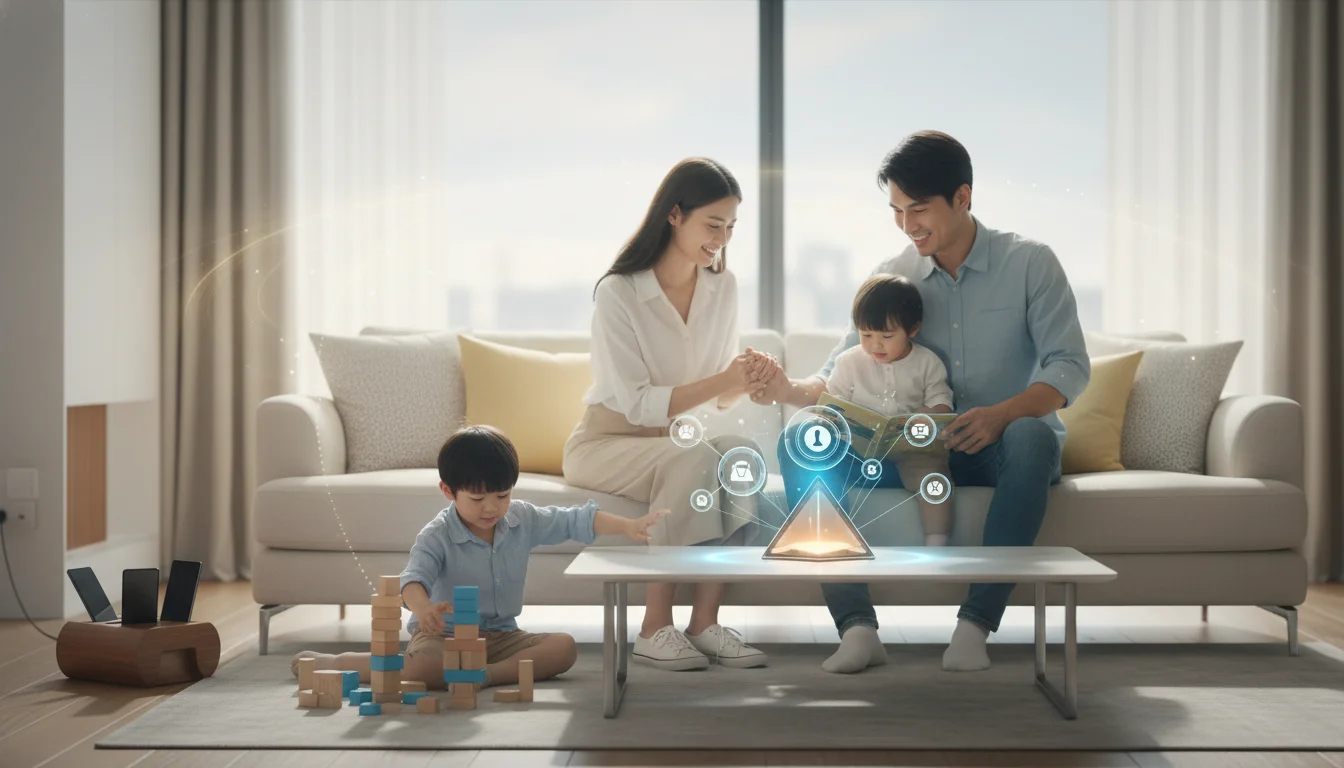
For the Concerned Parent, this work is doubly important. Your notification management is the blueprint your children will internalize. Have a family meeting to discuss the Triage Framework. Create a Family Notification Charter.
- Agree on what constitutes a “Tier 1” emergency contact for your family unit.
- Establish device-free zones (e.g., dinner table, bedrooms) and times (e.g., after 8 PM) where all family members, parents included, place phones in a common charging station.
- Use this as an opportunity to talk about the “psychology of the ping” with teens. Frame it not as a restriction, but as a superpower—the ability to control what they pay attention to in a world designed to steal it.
When you model the ability to be fully present, you gift your children with the experience of true connection, which is the most powerful antidote to smartphone addiction signs like irritability when separated from the device or using screens to regulate emotion.
The Weekly Connection Audit: Your Maintenance Ritual
Digital wellness is not a one-time setup. It’s a practice. Each Sunday evening, I perform a 10-minute “Connection Audit”:
- Review my Screen Time/Digital Wellbeing report neutrally, without judgment. What patterns do I see?
- Check any newly installed apps. Into which Tier do they default? Be ruthless.
- Ask: “Did my notification settings support my priorities this week—my deep work, my time with family, my mental rest?” If not, adjust.
This ritual ensures your digital environment evolves with your life’s changing priorities. For further reading on the science of attention, I recommend the work of Dr. Gloria Mark, author of “Attention Span,” which you can find through your local library or bookseller. For tools, exploring the non-profit Center for Humane Technology’s resources can provide deeper context.
Remember, the ultimate goal of notification management isn’t just productivity. It’s the reclamation of your cognitive space for what humans do best: deep thought, creative flow, and authentic, uninterrupted connection. Your attention is your life. It’s time to invest it wisely.


https://shorturl.fm/xcaLW
https://shorturl.fm/aMiQh