Your Home Isn’t Your Headquarters: A Psychologist’s Blueprint for Reclaiming Your Space and Sanity
If you’re reading this, I imagine you’re sitting at a kitchen table that doubles as a desk, or in a spare room that feels less like a sanctuary and more like a 24/7 satellite office. The work laptop glows ominously after hours. Your phone buzzes with a Slack notification during family dinner. The line between “on the clock” and “off the clock” has become so blurred it’s practically invisible. You’re not failing at remote work; you’re experiencing a classic case of context collapse—a psychological term for when the boundaries between our distinct life roles completely dissolve. The result? A nagging sense of being perpetually “available,” increased stress, and the slow erosion of the personal life you were hoping to enjoy more of by working from home.
As a behavioral psychologist, I want to first normalize this struggle. The human brain thrives on environmental cues to switch modes. The commute, the office door, the change of clothes—these were all ritualized boundary signals. Without them, our professional identity can colonize our personal space. But here’s the hopeful truth: boundaries are not walls you build out of guilt or frustration. They are conscious, compassionate practices you cultivate to protect your energy, your relationships, and your long-term ability to perform. This isn’t about working less; it’s about working with intention so you can live more.
The Behavioral Science of the “Always-On” Trap
To fix the problem, we must understand the engine driving it. The invasion of work into home isn’t just a bad habit; it’s a perfect storm of modern technology and ancient psychology.
First, we have the variable reward schedule of digital communication. That “ping” from an email or message is a modern-day slot machine. You don’t know if it’s a minor update or a critical, praise-worthy task, so you check it. Every. Single. Time. This dopamine-driven loop keeps us hooked to our devices, making intentional disconnection feel anxiety-inducing.
Second, remote work often triggers a deep-seated performance visibility anxiety. When you’re not physically seen, there can be an unconscious fear that you must prove your productivity through constant digital presence and immediate responsiveness. This leads to what I call performative availability—staying online not because of workload, but because of perceived expectation.
Finally, our homes lack the transition rituals that our brains crave. We go from a stressful video call directly to making lunch, carrying the cognitive residue of work into our personal time. This prevents true psychological recovery, leading to the chronic low-grade fatigue so many remote workers report.
The Three-Zone Home Framework: Architecting Your Psychological Space
We can’t rely on willpower alone. We must design our environment to do the heavy lifting. I advise clients to move beyond the concept of a “home office” and instead think in terms of three distinct psychological zones. This framework is about creating sensory and behavioral cues that tell your brain, “We are in a different mode now.”
| Zone | Primary Function | Key Cue & Ritual | Digital Rule |
|---|---|---|---|
| The Performance Zone | Focused, deep work & scheduled meetings. | A dedicated, consistent physical space (even a corner). A “start work” ritual (e.g., lighting a specific lamp, brewing tea in a work mug). | Work devices only. All non-work apps/notifications disabled on the computer. Use website blockers during focus sessions. |
| The Transition Zone | Psychological decompression and role shift. | A 10-15 minute activity performed after shutting down the Performance Zone. This is your replacement “commute.” | A strict device hand-off. Physically put work devices in a drawer or box in the Performance Zone. Switch to personal phone if necessary. |
| The Restoration Zone | Personal life, connection, and recharge. | The rest of your home. The cue is the completion of your Transition Zone ritual. | No work devices present. Use app limits on personal phone for work communication apps after a certain hour. |
Your Transition Zone ritual is the most critical new habit you can build. It must be sensory and deliberate. Examples include:
- A short walk around the block.
- Changing out of “work clothes” (even if they’re just different loungewear).
- Five minutes of mindful breathing or a quick household chore like watering plants.
- Listening to a specific playlist that signifies the shift.
The Communication Charter: Setting Expectations with Your Team (and Yourself)
Boundaries feel selfish until you frame them as a prerequisite for sustainable high performance. A Communication Charter is a proactive, written set of guidelines you share with your team and, crucially, commit to yourself.
Create a brief document or Slack post that outlines:
- Your Core Hours & Focus Blocks: “I am typically deep-focus work from 9am-12pm, and offline after 6pm.”
- Your Preferred Channels: “For urgent matters after hours, please text. For non-urgent project updates, please use Slack/email, and I’ll respond next business day.”
- Your Weekly “Recharge” Ritual: “To stay refreshed, I protect my lunch hour and log off promptly on Fridays at 4pm for a screen-free evening.”
This does two things: it manages others’ expectations, and it creates a public commitment that makes you more likely to honor your own rules. I encourage teams to do this collectively to build a culture of respect, not just individual guardrails. Resources like the American Psychological Association’s guide on burnout can provide a science-backed rationale for these practices.
Digital Decluttering: From Notification Anarchy to Intentional Flow
Your devices are the primary vectors of boundary invasion. It’s time to move from a default setting of “allow all interruptions” to a curated setting of intentional inflow. Think of your attention as a pristine kitchen counter. Notifications are like people walking in and dropping items on it without asking. You must reclaim control.
Conduct a Notification Audit:
- Go through every app on your work computer and phone. For each, ask: “Is this alert serving my priorities or someone else’s urgency?”
- Disable all passive notifications (social media, news). Switch them to scheduled checks.
- For communication apps (Slack, Teams, Email), turn off all sound and desktop notifications. Use the “Do Not Disturb” or “Focus Mode” function aggressively, scheduling it to align with your deep work blocks and personal time.
- Physically separate work and personal accounts on your phone. Use different browsers or profiles on your computer. This creates a small but powerful friction that reduces mindless checking.
The Weekend Boundary Reset: A 24-Hour Digital Sabbath Lite
For the chronically “always-on,” I prescribe a modified, achievable version of a digital sabbath. The goal isn’t a full tech detox, but a role-based disconnection. For 24 hours—say, Saturday 10am to Sunday 10am—you engage in a personal experiment: you are not an employee.
This means:
- No checking work email, Slack, or project management tools.
- If you must use your computer, it is for personal projects, movies, or hobbies only.
- Consciously engage in activities that provide tactile, analog feedback: cooking a meal, working with your hands, playing a board game, being in nature.
The first time you do this, you will feel anxiety. Observe it. Journal about it. That anxiety is the symptom of the very dependency we’re healing. By Monday, you’ll likely find your focus and creativity are sharper, proving that strategic disconnection fuels better performance. For more on the science of rest, the Harvard Business Review has excellent data on the value of unplugging.
FAQ: Navigating Common Remote Work Boundary Dilemmas
Q: What if my company has a global team and my boss emails me at night?
A: This is where your Communication Charter is vital. You can acknowledge the email the next morning: “Thanks for sending this through. I’ve just seen it and will address it during my core hours today.” This sets a polite but clear norm. For true emergencies, establish the “urgent call” protocol outlined in your charter.
Q: I share a small apartment. How can I create a Performance Zone?
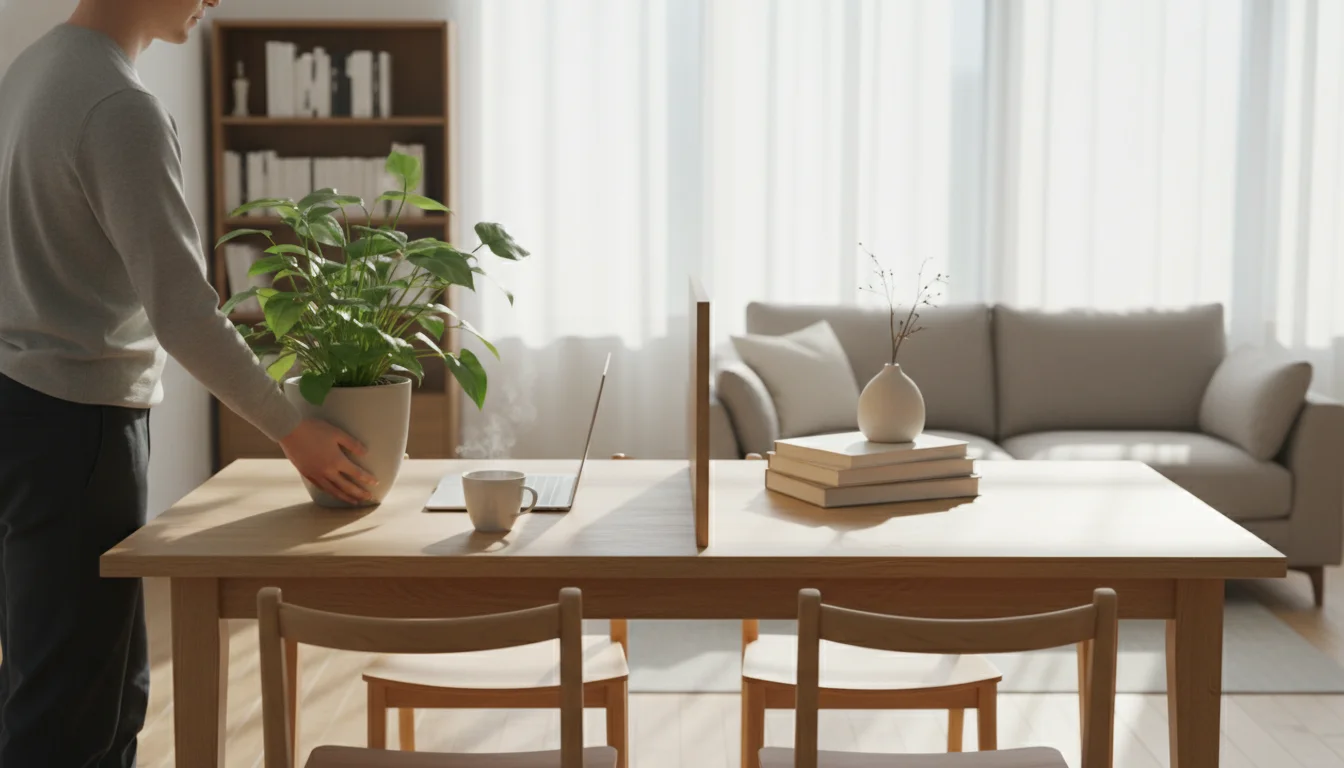
A: The zone is psychological. Use visual cues: a specific placemat that denotes “work desk,” a divider screen, or even a particular hat you wear during focus time. The key is the consistent ritual of setting up and putting away your work items completely at the day’s end.
Q: I feel guilty logging off when others are still online.
A: This is performance visibility anxiety. Remember, longevity and avoiding burnout make you a more valuable team member. Model healthy boundaries; you may give others permission to do the same. Productivity is measured by output, not online theater.
Q: How do I handle the pressure to be constantly responsive on chat apps like Slack?
A> Proactively communicate your focus schedule in your status. Use: “Deep work until 1pm – will respond after.” Utilize “Do Not Disturb” modes and encourage your team to use threaded conversations instead of @channel for non-urgent matters. Advocate for async communication culture. Platforms like Doist have great resources on building this culture.
Reclaiming your home from remote work sprawl is not a one-time fix. It is a daily practice of self-respect, built on the understanding that clear boundaries are the foundation of both professional excellence and personal well-being. Start not by building a fortress, but by implementing one small ritual—a definitive shutdown routine, a declared focus block, a single notification silenced. These are the bricks with which you rebuild the sacred space between your work and your life.