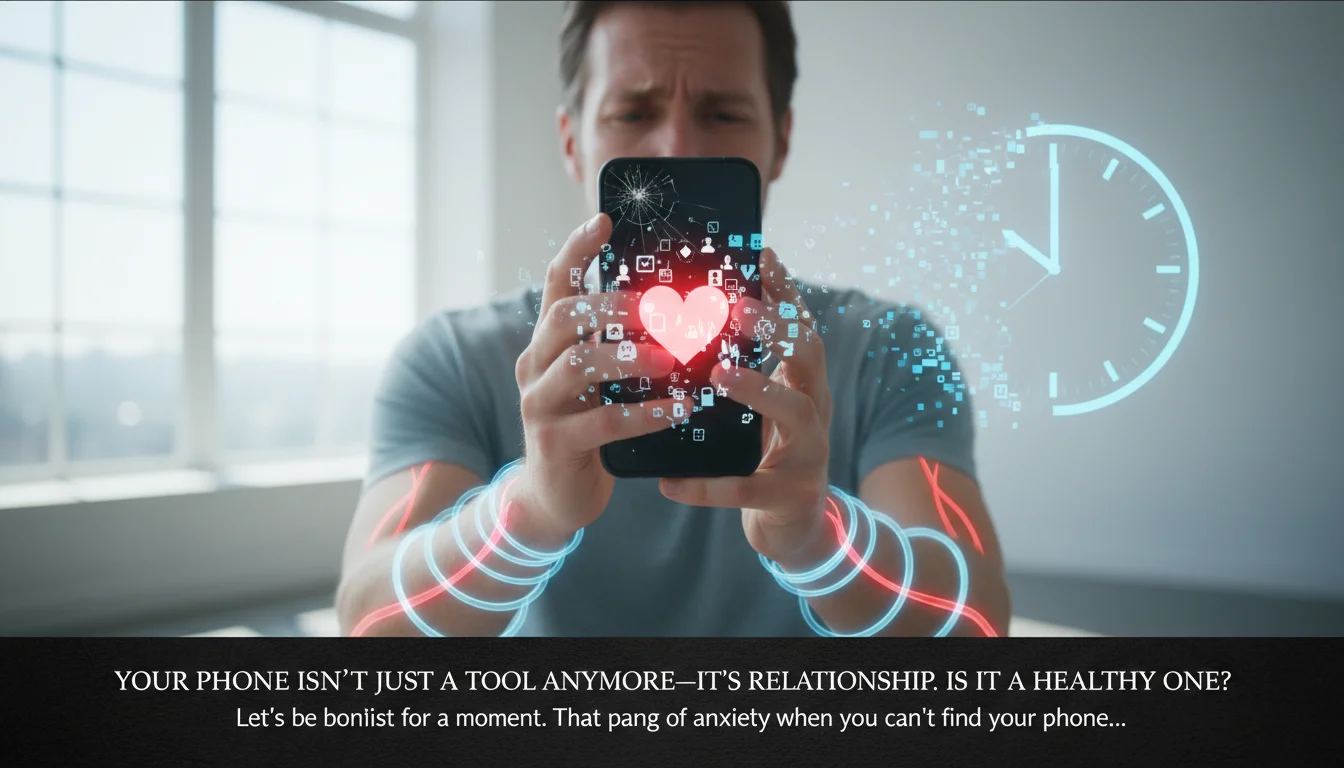
Your Phone Isn’t Just a Tool Anymore—It’s a Relationship. Is It a Healthy One?
Let’s be honest for a moment. That pang of anxiety when you can’t find your phone. The mindless scroll through reels while dinner burns. The quick “check” of your notifications that somehow turns into 45 lost minutes. If you’re reading this, you’ve likely felt a quiet unease about your smartphone use, or you’re watching someone you love slip into a digital fog. You’re not failing at willpower, and you’re not alone. What you’re experiencing are the very real, neurologically-driven signs of a habit loop that has overstepped its bounds.
As a behavioral psychologist, I don’t use the term “addiction” lightly. In clinical settings, it requires significant functional impairment. But for our modern lives, we can talk about problematic use or compulsive dependency—patterns where your device shifts from a servant to a master, eroding your time, focus, and real-world connections. The goal isn’t to instill shame or demand a cold-turkey purge. It’s to apply a lens of compassionate curiosity. Think of this not as a diagnosis, but as a Digital Relationship Audit. By spotting the signs, we can move from autopilot to intention.
The Silent Signals: More Than Just Screen Time
Most of us fixate on “screen time” numbers. While a data point, it’s a crude measure. The true signs of a problematic relationship are woven into your behavior and emotional state. Here’s what to observe in yourself or a family member:
- The Phantom Vibration Syndrome: You feel your phone buzz in your pocket… but it didn’t. This isn’t imaginary; it’s a conditioned neurological response. Your brain has been trained to anticipate a dopamine-triggering notification, so it creates the sensation.
- The Ritual Interruption: You cannot start or end a basic daily task without your phone. Think: checking social media before your feet hit the floor in the morning, or scrolling immediately after shutting off the bedroom light. The phone becomes a mandatory bookend to your life.
- The Avoidance Scroll: You reach for your device not for a specific purpose, but to escape an uncomfortable emotion—boredom, stress, loneliness, or a difficult task. This is digital emotional regulation, and it short-circuits your ability to develop healthier coping skills.
- The Deteriorating Conversation: During in-person talks, your eyes flicker to your phone, or you hold it in your hand. The subtext is clear: “This in front of me might be more important than you.” This erodes the foundation of trust and presence in relationships.
- The Anxiety of Separation: A low-grade panic sets in if you leave your phone in another room, its battery dips below 20%, or you realize you’ve lost it. This goes beyond practicality; it feels like losing a lifeline or a part of yourself.
The Neurological Playbook: Why Your Brain Loves to Hate Your Phone
To understand these signs, we must peek under the hood. Your smartphone is a variable reward machine, expertly designed to exploit the same dopamine-driven learning pathways as slot machines. Dopamine isn’t about pleasure; it’s about anticipation and motivation. When you swipe to refresh, you don’t know if you’ll get a “like,” a compelling update, or nothing. That “maybe” is what hooks you.
This creates a powerful habit loop: Cue > Craving > Response > Reward. A notification (cue) triggers a craving for distraction or connection. Picking up the phone (response) provides the variable reward of new information. Each cycle strengthens the neural pathway. Over time, the mere sight of your phone or a moment of boredom can trigger the craving. This isn’t a moral failing; it’s a design feature you’re up against. The “social media anxiety” you feel is often the anxiety of being disconnected from this reward-seeking loop.
The Family Digital Impact Assessment
It’s one thing to assess yourself, but how do these patterns manifest in a family system? Use this simple table to reflect on common dynamics. This isn’t about blame, but about identifying patterns that need a gentle, collective shift.
| Context | Sign of Healthy Integration | Sign of Problematic Dependency |
|---|---|---|
| Mealtime | Phones in a basket or another room; focused conversation. | Phones on the table; frequent checking; parallel scrolling instead of talking. |
| Bedtime Routine | Phone charging outside the bedroom; using a traditional alarm clock. | Scrolling in bed until eyes are heavy; phone is the last thing seen at night and first in the morning. |
| Leisure & Boredom | Reaching for a book, hobby, or conversation. Using the phone for specific, intentional activities. | Defaulting to the phone at any idle moment. Inability to tolerate unstructured time without digital input. |
| Parent-Child Interaction | Present, device-free play or conversation. Co-viewing digital content with discussion. | Parent physically present but mentally absent due to their device. Using a screen as a default pacifier for a child. |
| Emotional Response | Feeling mildly annoyed if you forget your phone, but moving on with your day. | Irritability, anger, or pronounced anxiety when unable to access the device. |
Beyond the “Detox”: A Strategic Framework for Recalibration
The term “dopamine detox” is popular, but it’s a misnomer. You cannot detox from a crucial neurotransmitter. What you can do is reset your sensitivity to everyday rewards. It’s less about harsh deprivation and more about mindful recalibration. Here is a structured, 3-tier framework I use with clients:
Tier 1: The Environmental Reshuffle (Easy Wins)
- Create Friction: Move social media apps off your home screen and into folders. Turn off all non-essential notifications. Change your display to grayscale (this makes the visual rewards less stimulating).
- Designate a “Home Base”: Choose one spot in your home where your phone “lives” when you’re not using it. Not your pocket, not your hand. This breaks the constant physical tether.
- Implement the 20-Minute Rule: When you have an urge to scroll mindlessly, set a timer for 20 minutes and do literally anything else first. Often, the urge will pass as your brain recalibrates.
Tier 2: The Behavioral Swap (Building New Pathways)
This is where we address the “avoidance scroll.” When you feel the itch to escape:
- Name the Emotion: Simply say to yourself, “I am feeling stressed right now,” or “I am bored.”
- Offer an Alternative: Have a pre-written list of 5-minute non-digital actions: step outside, make a cup of tea, do 10 stretches, sketch on a notepad. You’re not denying the craving; you’re redirecting it.
- Practice Single-Tasking: Commit to one screen at a time. No TV with phone scrolling. This trains your fractured attention span back to baseline.
Tier 3: The Connection Investment (The Ultimate Goal)
The void left by reducing phone time must be filled with something more nourishing. This is the antidote to social media anxiety.
- Schedule Micro-Connections: Instead of a 10-minute scroll, have a 10-minute face-to-face chat with a family member or call a friend.
- Rediscover “Flow”: Engage in an activity that absorbs you completely—gardening, playing an instrument, building a model, a physical sport. This state provides intrinsic rewards far beyond a “like.”
- Curate Your Input, Don’t Just Consume It: Actively choose what you engage with online. Follow educational accounts, artists, or hobbyists. Make your feed a garden you tend, not a junk-food buffet you binge on.
When to Seek Additional Support
For most, these strategic shifts create meaningful change. However, if smartphone use is severely impacting work, school, relationships, or is linked to intense depression or anxiety, it may be a symptom of a deeper issue. In these cases, consulting a licensed mental health professional is a courageous and critical step. Organizations like the American Psychological Association offer directories to find qualified therapists, and resources from places like the Common Sense Media research library can provide valuable context for parents.
FAQ: Your Top Questions on Smartphone Habits, Answered
Q: I need my phone for work. How can I manage this?
A: This is the core challenge. The key is compartmentalization. Use separate work and personal profiles if your device allows. Have strict start and end times for checking work email/slack. Physically put the phone away after your “work day” ends. The goal is to prevent work-based use from becoming the gateway to endless personal scrolling.
Q: My teenager’s entire social life is on their phone. How can I approach this without a fight?
A: Acknowledge the reality first. Their social world is digital. Instead of framing it as “taking away,” frame it as “adding balance.” Use curiosity: “I notice you seem really stressed after being on Instagram for a while. What’s that about?” Collaborate on a “Digital Well-Being Plan” that includes device-free times (like meals) where you *all* participate, and encourage the translation of online friendships into occasional safe, in-person meetups.
Q: Are some people just more prone to this than others?
A: Absolutely. Individuals with underlying ADHD, anxiety, depression, or loneliness are often more vulnerable, as the device provides immediate (if fleeting) relief. This isn’t about weakness; it’s about a tool meeting an unmet need. Addressing the root cause, often with professional support, is essential alongside habit change.
Q: Will these changes actually make me happier?
A> The research is clear: passive, comparative scrolling correlates with lower well-being. Active, intentional use (connecting, learning, creating) does not. The happiness comes not from the absence of the phone, but from the presence you reclaim—in your own thoughts, your surroundings, and your relationships. You are trading algorithmic validation for authentic experience. That is a trade worth making.
The most important sign to look for is not in your screen time report, but in your own sense of agency. Do you choose to use your device, or does a habit choose for you? By applying this compassionate, evidence-based lens, you move from being a passenger to the pilot of your digital life. Start with one observation, one small environmental tweak. That is how you rebuild a relationship with technology that serves you, not the other way around.