
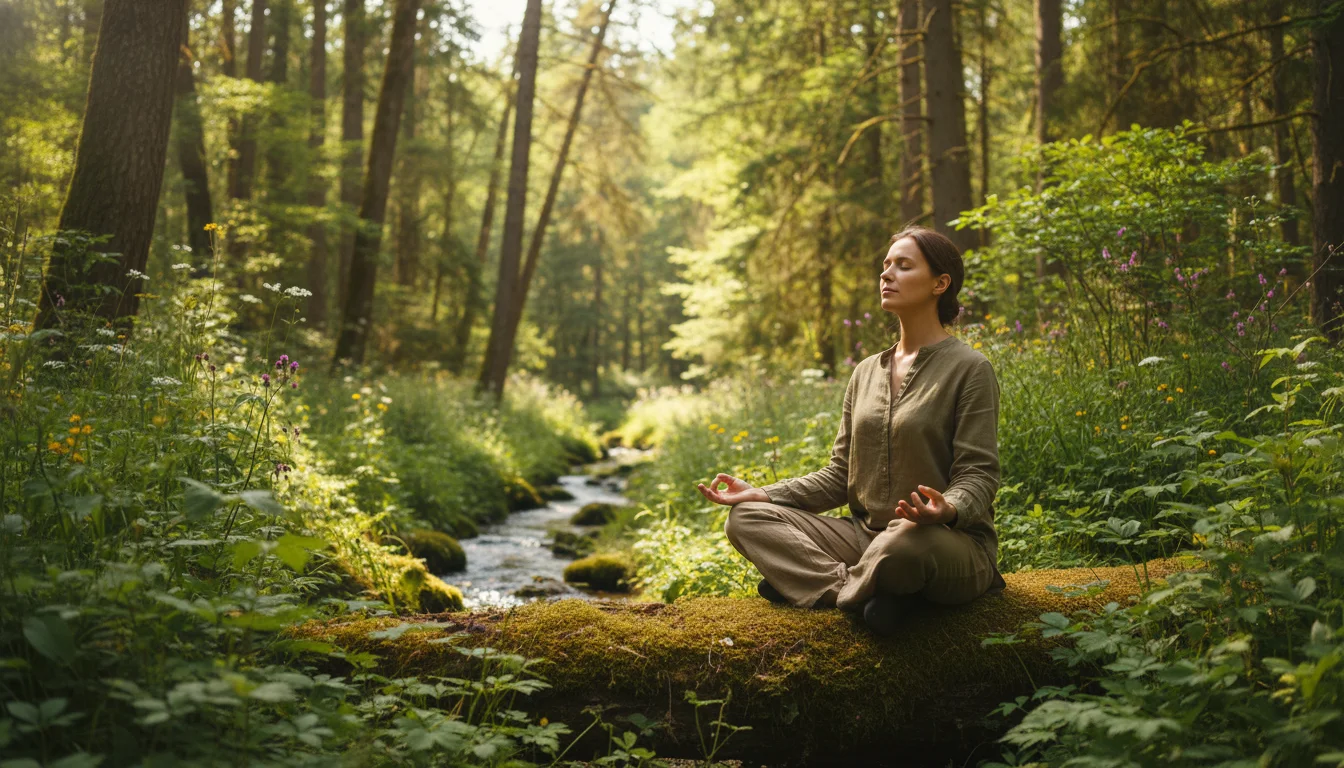
Your Brain on Concrete: Why Your Weekend Needs a Dose of Green, Not Just More Screen Time
If you’re reading this, you’ve likely just powered through another workweek defined by back-to-back Zooms, a relentless pinging from Slack, and the soft, ever-present glow of screens long after sunset. You feel a specific kind of exhaustion—not just physical tiredness, but a mental fuzziness, a shortened fuse with your family, and a sense that your internal battery is stuck at 1%, no matter how much you scroll or stream. You might chalk it up to burnout, but what if the core issue isn’t just what you’re doing, but where you’re doing it? As a behavioral psychologist, I see this daily: a profound case of what we call Nature Deficit Disorder, not as a clinical diagnosis, but as a powerful metaphor for the soul-deep fatigue that comes from a life lived almost entirely indoors and online.
The good news is that the antidote is ancient, free, and scientifically validated. It’s called nature therapy (or eco-psychology), and it’s far more than just “going outside.” It’s the intentional, mindful practice of engaging with natural environments to restore cognitive function, regulate emotion, and rebuild our capacity for focus and connection. Let’s move beyond the vague advice to “get some fresh air” and build an evidence-based, practical framework for using nature to truly reset your nervous system.
Beyond a Walk: The Science of Eco-Psychology and Stress Reduction
First, let’s validate your feeling with data. That mental fog and irritability aren’t a personal failing; they are predictable neurological responses to our modern habitat. Our brains evolved in natural, rhythmic environments—not in rectangular rooms under fluorescent lights with intermittent dopamine hits from notifications. Research from institutions like the University of Michigan and Stanford consistently shows that urban environments demand directed attention—a taxing, effortful focus needed to navigate traffic, process crowds, and ignore artificial stimuli. This depletes our attentional resources, leading to what’s termed attention fatigue.
Nature, in contrast, engages soft fascination. The gentle movement of leaves, the pattern of clouds, the sound of a stream—these elements hold our attention effortlessly, allowing the brain’s executive control network to rest and replenish. A seminal study found that participants who walked in a natural setting showed improved performance on memory and attention tasks compared to those who walked in an urban setting. The mechanism? Reduced rumination—that repetitive, negative thought pattern centered on the self—which is visibly decreased in brain scans after nature exposure.
This is the core of eco-psychology: it recognizes that human wellbeing is inextricably linked to the health of our natural environment. Our separation from it isn’t just an aesthetic loss; it’s a physiological and psychological stressor. When we engage in nature therapy, we’re not just relaxing; we’re returning our cognitive and emotional systems to a state they were designed for.
The Weekend Reconnection Protocol: A 3-Tiered Framework
Knowing the science is one thing; applying it during your precious, limited downtime is another. Throwing “go for a hike” onto a to-do list can feel like another chore. Instead, I coach families and professionals using a tiered approach. Start where you are, and build from there.
| Tier | Core Practice | Time Commitment | Psychological Goal | Example Activity |
|---|---|---|---|---|
| 1. Micro-Restoration | Intentional Sensory Breaks | 5-15 minutes daily | Disrupt stress spirals, provide acute calm. | “Sit-Spot” observation, barefoot grounding in grass, mindful gardening. |
| 2. Weekly Replenishment | Dedicated Green Immersion | 60-90 minutes weekly | Reverse attention fatigue, boost creative problem-solving. | Forest bathing walk, park picnic without devices, nature photography. |
| 3. Deep Reset | Extended Nature Engagement | Half-day or full day monthly/quarterly | Catalyze perspective shifts, solidify new mental habits. | Volunteer trail cleanup, kayaking/hiking trip, camping overnight. |
Think of these tiers not as a rigid ladder, but as a toolkit. On a Tuesday afternoon when work is overwhelming, a Tier 1 practice is your emergency reset button. Your Saturday morning is the non-negotiable anchor for Tier 2. Tier 3 is the quarterly investment that prevents the gradual creep of nature deficit from becoming a chronic condition.
From Scrolling to Seeing: Practical Detox for the “Indoor Mind”
Your brain, after a week of digital immersion, is like a camera stuck in macro mode—strained to focus intensely on small, close-up pixels. Nature therapy shifts the lens to wide-angle. The goal is passive engagement, not achievement. Here’s how to structure your practice:
- Initiate a Digital Handoff: Literally. As you transition to your nature time, say aloud or think, “I am handing off my attention from the digital world to the natural world.” Place your phone on silent and out of sight. This ritual cues your brain for the shift.
- Employ the 5-4-3-2-1 Grounding Technique (Nature Edition): Once in your green space, pause. Identify:
- 5 things you can see (the texture of bark, a bird’s flight path).
- 4 things you can feel (the breeze, sun warmth, soil underfoot).
- 3 things you can hear (leaves rustling, distant water, insects).
- 2 things you can smell (pine, damp earth, flowers).
- 1 thing you can taste (the clean air, a wild edible berry if safe).
This forcibly anchors you in the present sensory experience.
- Practice “Non-Directed” Attention: Let your gaze wander. Don’t force yourself to “appreciate the beauty.” Instead, simply notice what catches your attention—a pattern of moss, the way light filters through branches. Follow curiosity, not an agenda.
For families, turn this into a game: “Who can find the most interesting cloud shape?” or “Let’s listen for three different bird calls.” You’re not just having family time; you’re collectively training your attentional muscles away from the algorithmic pull.
Cultivating Your Personal Eco-Psychology Habit
Sustainability is key. To make this stick, we must integrate it into our identity and environment. Think of it as curating your nature diet, just as you might your information feed.
- Audit Your “Green Access”: Map a 10-minute radius from your home and office. Where are the pockets of green? A community garden, a small park, a tree-lined street? Knowing your quick-access points makes Tier 1 practice effortless.
- Create a “Nature Nudge”: Leave your walking shoes by the door. Keep a picnic blanket in your car. Schedule your 90-minute weekly block in your calendar as a “Critical Replenishment Meeting.” Design your environment to make the healthy choice the easy choice.
- Bridge the Digital-Nature Gap (Wisely): Use apps like iNaturalist to identify plants and birds after your walk, turning the experience into a learning journey. Listen to nature soundscapes or podcasts about ecology to inspire your outing, not replace it.
Remember, the goal is integration, not perfection. A 10-minute walk in a leafy park on your lunch break counts. Watering your houseplants with full attention counts. It’s about shifting your relationship from being a passive occupant of artificial spaces to an active participant in the natural world, however you can access it.
FAQ: Your Nature Therapy Questions, Answered
Q: I live in a dense urban area with very little green space. What can I do?
A: This is a common challenge. Focus on quality over quantity. Seek out pocket parks, botanical conservatories, or even sit by a fountain or in a courtyard with a single tree. The key is the quality of your attention. Even watching the sky from a rooftop or observing a potted plant’s growth cycle can engage soft fascination. Also, research shows that even viewing images or videos of nature can have a mild restorative effect—consider a high-quality nature documentary as a temporary supplement, not a replacement.
Q: How do I get my teenager, who is glued to their device, to engage with this?
A> Avoid framing it as a “screen time vs. nature” battle. Instead, find the intersection of their interests and the natural world. Are they into photography? Suggest a macro photography challenge in the backyard. Into fitness? Try a trail run together. Into music? Have a listening session outdoors. The initial “hook” can be digital—like using a star-gazing app to find constellations at night. The goal is co-presence in nature, not a tech-free purity test.
Q: I’ve heard about “forest bathing.” Is that the same thing?
A> Shinrin-yoku, or forest bathing, is a beautiful, structured Japanese practice that falls under the umbrella of nature therapy. It emphasizes slow, mindful immersion using all senses. You can think of it as a formalized, guided Tier 2 practice. The principles are perfectly aligned with what we’ve discussed: mindful presence, sensory engagement, and receiving the therapeutic benefits of a forest atmosphere.
Q: How quickly will I feel results?
A> Acute stress reduction—feeling calmer, less frantic—can be felt in as little as 10-20 minutes of intentional practice. The restoration of focused attention and a reduction in mental fatigue typically becomes noticeable after consistent weekly immersion (Tier 2). The deeper, more perspective-shifting benefits (Tier 3) accumulate over time, much like the difference between a good night’s sleep and a full vacation.
Your mental energy is your most precious resource. In our quest to manage it, we often turn to more technology—productivity apps, meditation apps, noise-cancelling headphones. While these have their place, we must not overlook the original, fundamental source of cognitive restoration: the living world itself. This weekend, I invite you to conduct an experiment. Before you dive into another streaming marathon or scroll through another social feed, invest first in a Tier 2 Green Immersion. Observe not just the environment around you, but the environment within you—the settling of your thoughts, the softening of your shoulders, the slow return of a sense of spaciousness. That feeling is not an escape from your real life. It is the foundation of it, finally being replenished.



Really well explained, the part about vintage looks was explained clearly, exactly what I was looking for.